
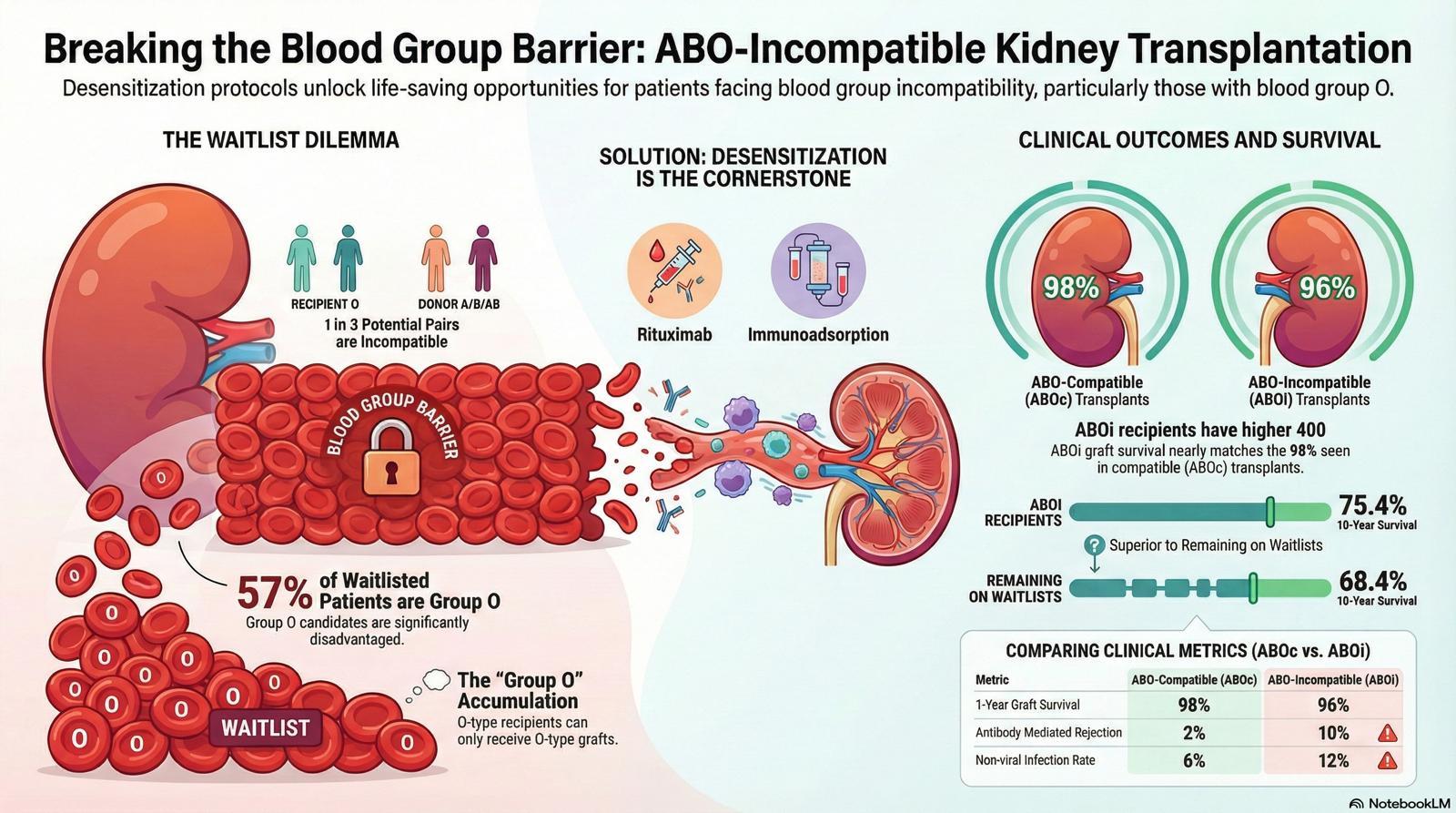
What Is ABO-Incompatible Kidney Transplantation
ABO-incompatible (ABOi) kidney transplantation is a specialized procedure that allows successful kidney transplantation even when the donor and recipient have mismatched blood types. Under normal circumstances, the recipient’s immune system would recognize the donor’s blood group antigens as foreign and launch an immediate attack, leading to organ rejection. With specific medical protocols, this biological barrier is “crossed” by temporarily suppressing the recipient’s immune system and physically removing the offending antibodies before surgery.
The Biological Barrier
The ABO system is defined by specific carbohydrate antigens (sugars) and the antibodies produced against them. Blood group A and B antigens are expressed not only on red blood cells but also on the endothelial, tubular, and glomerular cells of the kidney.
If there is a mismatch, the recipient’s circulating anti-A or anti-B antibodies bind to these antigens in the donor kidney. This binding activates the complement system, causing local cell damage, hemorrhage, and hyper-acute rejection of the graft.
The Desensitization Process
To make these transplants safe, recipients undergo a “desensitization” protocol to lower antibody concentrations (titers) to a safe level (typically <1:8) before surgery. The cornerstone of this treatment includes:
- Antibody Removal:
Techniques such as plasmapheresis (PEX) or immunoadsorption (IA) are used to physically filter antibodies out of the patient’s blood. - Inhibition of Production:
The drug rituximab is used to deplete B-cells, preventing the body from rapidly producing new anti-A or anti-B antibodies. - Immunosuppression:
Recipients receive intensive induction and maintenance drugs (such as tacrolimus, MMF, and steroids) and sometimes intravenous immunoglobulins (IVIG) to further protect the graft.
For patients without a compatible living donor, ABOi transplantation offers a survival advantage compared to remaining on dialysis or waiting for a deceased donor transplant.